2028 Chevrolet Silverado EV Specs, Redesign, Interior
2028 Chevrolet Silverado EV Specs, Redesign, Interior – The 2028 Chevrolet Silverado EV could become one of the most important electric pickups in Chevrolet’s next product cycle. The current Silverado EV has already demonstrated that a full-size battery-electric truck can combine serious towing capability, enormous torque, long driving range, and useful work-oriented functionality without abandoning the familiar Silverado identity. Chevrolet currently offers the Silverado EV with up to 492 miles of EPA-estimated range on select configurations, while maximum towing capability reaches 12,500 pounds on the 2026 Work Truck configuration. (chevrolet.com) For 2028, the focus could shift toward greater efficiency, faster charging, smarter software, and an even broader range of configurations.
Unlike many electric vehicles designed primarily around passenger comfort, the Silverado EV was engineered to retain the fundamental utility expected from a full-size pickup. The truck uses a dedicated EV architecture, offers four-wheel steering, an available Multi-Flex Midgate, a large front storage compartment, and an available Multi-Flex Tailgate. The combination allows the Silverado EV to transport unusually long objects while retaining a conventional pickup bed when the Midgate is closed. That flexibility could become even more sophisticated in a future model as Chevrolet learns from early Silverado EV owners and commercial fleet customers.
The 2028 model also arrives in a rapidly changing electric-truck market. The Ford F-150 Lightning, GMC Sierra EV, Ram electric pickup strategy, Rivian R1T, and Tesla Cybertruck all compete for customers who increasingly expect electric trucks to provide both performance and practical utility. Chevrolet therefore cannot rely on the Silverado badge alone. A future Silverado EV needs compelling range, competitive charging performance, dependable towing, useful payload capacity, advanced driver assistance, and a cabin capable of competing with premium electric trucks.
It is important to distinguish confirmed specifications from future expectations. Chevrolet has not published a complete 2028 Silverado EV specification sheet, final trim structure, official MSRP, or release schedule. The current 2026 Silverado EV provides the strongest reference point for forecasting the next model. Therefore, the 2028 Silverado EV discussed here represents an informed projection rather than a confirmed factory specification. If Chevrolet follows the development path established by the current truck, the next-generation model could become more efficient and technologically advanced while preserving the rugged practicality associated with the Silverado name. 2028 Chevrolet Silverado EV Specs
2028 Chevrolet Silverado EV Redesign and Update Plan
Exterior & Interior
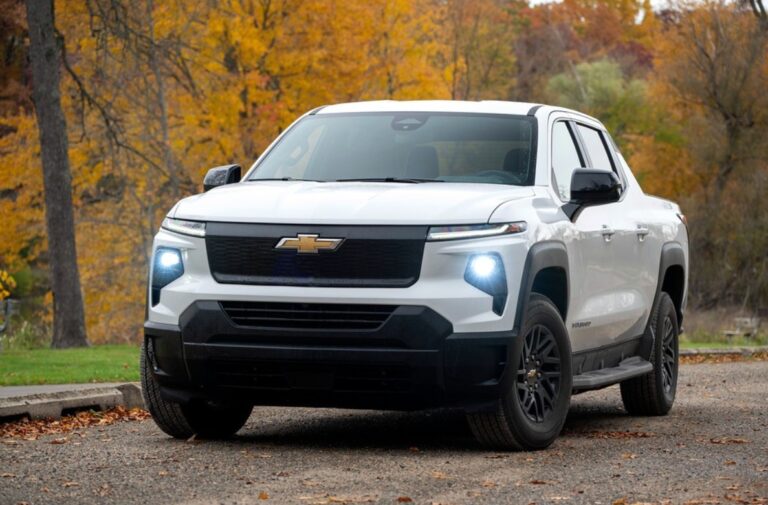
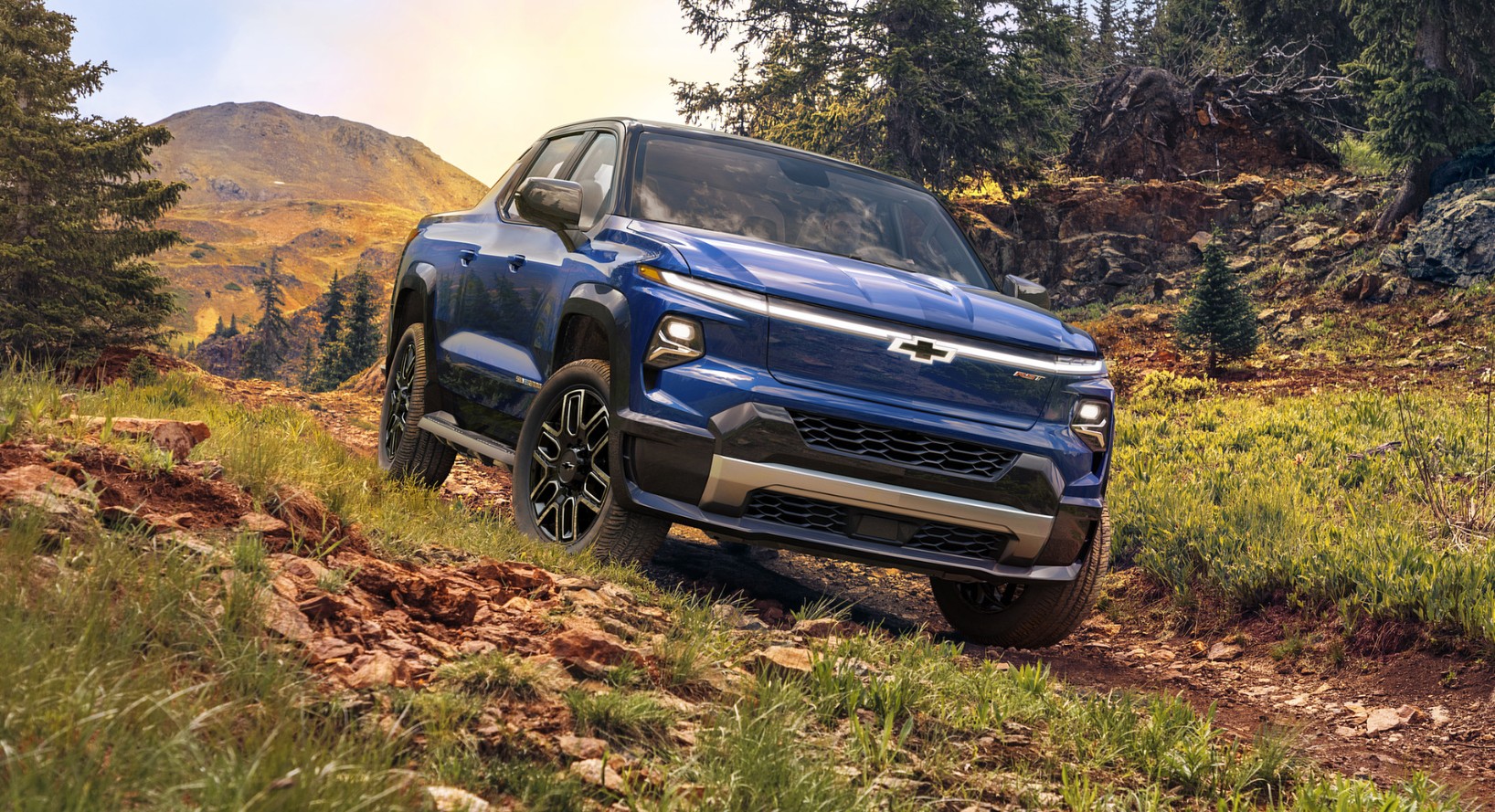
The exterior of the 2028 Chevrolet Silverado EV should remain unmistakably truck-like while becoming more aerodynamic. The current EV’s front end already differs significantly from the gasoline Silverado, using a smoother nose and distinctive lighting signature to reduce aerodynamic drag. A future version could refine the grille-free front fascia, narrow the lighting elements, improve airflow management, and introduce active aerodynamic shutters or underbody treatments. Because aerodynamic drag has a major effect on electric-truck range, even relatively subtle body changes could produce measurable efficiency gains at highway speeds.
The side profile could remain long and muscular, with a large crew-cab configuration and a practical pickup bed. Four-wheel steering is likely to remain an important feature because it improves low-speed maneuverability despite the truck’s substantial dimensions. The current Silverado EV can also use its Multi-Flex Midgate to extend the cargo area significantly when transporting long objects. A future model could improve the sealing, operating mechanism, storage solutions, and digital controls associated with the Midgate. Such improvements would make the electric truck more useful for contractors, outdoor enthusiasts, and customers who regularly carry oversized cargo.
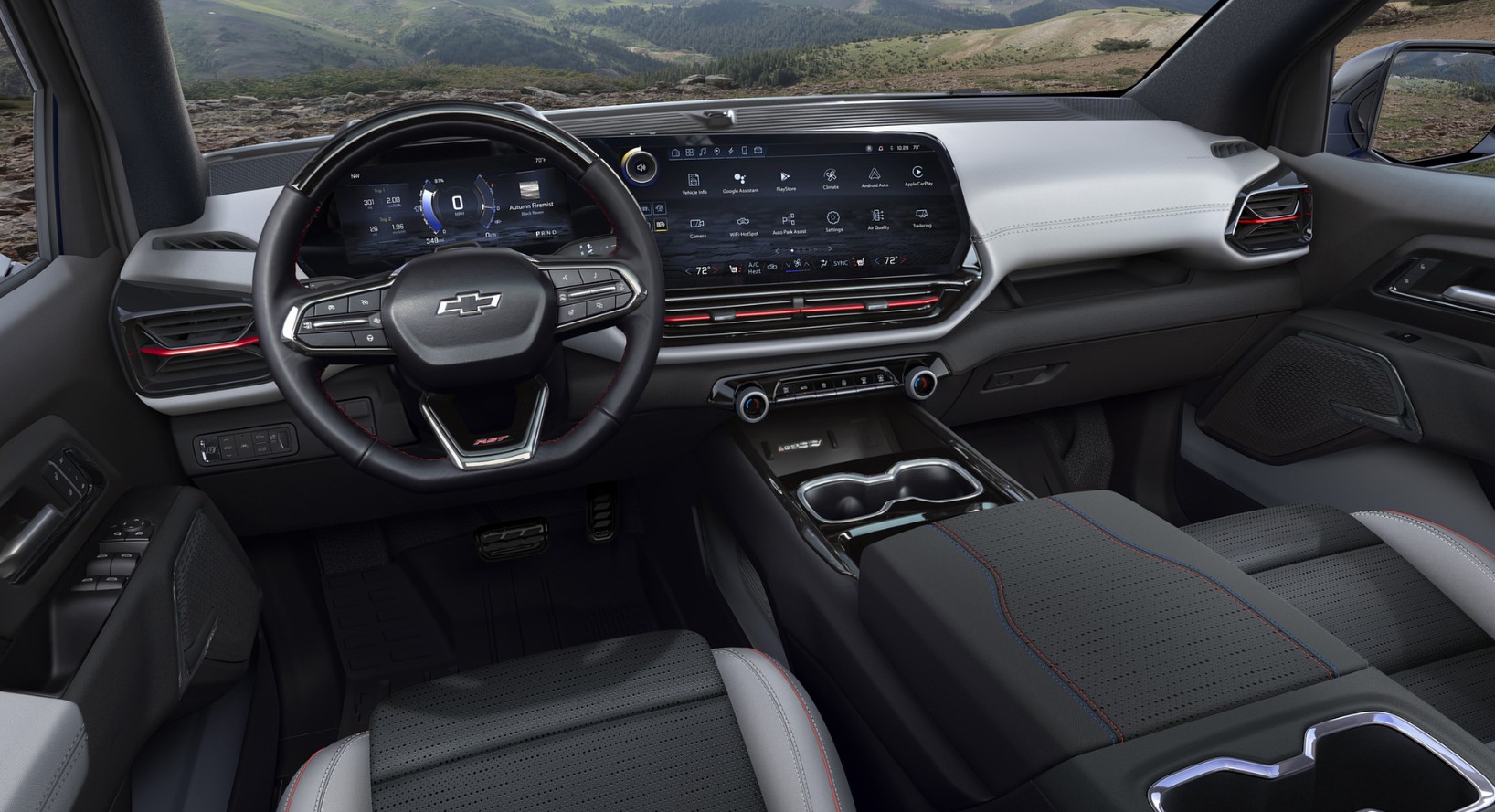
Inside, the 2028 Silverado EV could become considerably more refined. The current cabin already combines a large infotainment display with a digital instrument cluster, while upper configurations offer premium seating and additional technology. A future truck could use higher-quality materials, improved acoustic insulation, more comfortable seat cushioning, and additional storage throughout the cabin. Because electric powertrains are inherently quiet compared with combustion engines, road and wind noise become more noticeable, making acoustic engineering especially important in a large electric pickup.
The dashboard could evolve into a cleaner digital workspace without eliminating the physical controls that pickup owners need. Dedicated buttons for climate functions, drive modes, towing settings, and essential vehicle controls would remain useful, while the central display could handle navigation, charging, vehicle settings, camera views, and trailer information. A future Silverado EV could also feature a larger head-up display, advanced digital key technology, wireless smartphone charging, premium audio, configurable ambient lighting, and a more sophisticated camera system. The result could be a cabin capable of competing with luxury-oriented electric pickups without sacrificing its work-focused identity.
The 2028 Chevrolet Silverado EV may not require a dramatic visual redesign because the existing electric pickup already has a distinctive shape. Instead, Chevrolet could focus on an extensive technology and efficiency update. The current Silverado EV uses a dedicated Ultium-based electric architecture, and future improvements could concentrate on battery chemistry, cell packaging, inverter efficiency, thermal management, software, and aerodynamic optimization. These changes could increase real-world range without requiring an enormous increase in battery capacity.
Battery technology is likely to be one of the most important development areas. The current Silverado EV already offers exceptional range on certain configurations, but battery size has a direct relationship with vehicle weight, manufacturing cost, and charging requirements. A future model could use higher-energy-density cells to achieve similar or greater range from a smaller and lighter battery pack. Improvements in thermal management could also help the truck maintain consistent charging speeds and performance in extreme temperatures. Chevrolet could potentially offer different battery capacities depending on whether the customer prioritizes range, towing, payload, or purchase price.
Charging performance should receive similar attention. Chevrolet currently advertises DC fast charging capability of up to 350 kW on Silverado EV models, with some configurations capable of adding significant range during a short charging stop. (chevrolet.com) A 2028 truck could improve charging consistency rather than simply increasing the peak number. Better battery preconditioning, more efficient thermal control, higher-voltage electrical architecture, and improved charging curves could reduce total road-trip charging time. Broader access to fast-charging networks would also make the Silverado EV more practical for customers traveling long distances.
Software could become another defining feature. The current Silverado EV already offers a large 17.7-inch infotainment display and an 11-inch driver information center. (chevrolet.com) The 2028 model could add more sophisticated energy management, predictive route planning, trailer-aware range calculations, improved over-the-air updates, enhanced voice commands, and more comprehensive smartphone integration. For commercial operators, fleet-management functions could become especially important, including remote charging management, vehicle health monitoring, and detailed energy-consumption reports.
2028 Chevrolet Silverado EV Specs
Engine & Performance
The 2028 Chevrolet Silverado EV should continue using dual-motor all-wheel-drive configurations across much of its lineup, although the exact motor outputs are likely to vary according to trim. The current truck demonstrates how much performance an electric pickup can provide. Chevrolet lists up to 760 horsepower and 785 lb-ft of torque in Wide Open Watts mode for certain Silverado EV configurations, while the 2026 RST can reach 725 horsepower and 775 lb-ft under its performance settings. (chevrolet.com) A future model could deliver similar acceleration while improving efficiency and thermal consistency.
The most powerful 2028 version could potentially exceed 750 horsepower, but maximum output should not be the primary engineering target. Electric pickups benefit enormously from instant torque, meaning a truck does not need supercar-level horsepower to feel exceptionally quick. Chevrolet could instead focus on maintaining strong performance while reducing battery consumption. Better inverters, improved motor efficiency, revised gear reduction, lower rolling resistance, and more sophisticated traction control could help the Silverado EV accelerate strongly without wasting energy.
Towing will remain one of the most important performance metrics. Chevrolet currently advertises up to 12,500 pounds of maximum trailering capability for the 2026 Silverado EV Work Truck. (chevrolet.com) The 2028 model could improve towing software rather than dramatically increasing the maximum rating. Trailer-aware navigation could calculate expected energy consumption based on trailer weight, road grade, speed, temperature, and wind. The truck could then recommend charging locations and provide a more realistic estimated range with the trailer attached. That would be more useful to owners than simply increasing the headline horsepower figure. 2028 Chevrolet Silverado EV Specs
2028 Chevrolet Silverado EV Fuel Economy
Fuel economy will naturally be expressed in terms of electric efficiency rather than miles per gallon. EPA ratings are likely to vary substantially by wheel size, battery capacity, drivetrain configuration, and body equipment. The current Silverado EV’s long-range configurations demonstrate that careful aerodynamic and powertrain optimization can produce remarkable range for a full-size pickup. Chevrolet could potentially target more than 500 miles of EPA-estimated range on a specialized long-range configuration, although such a figure remains speculative. For everyday owners, improved efficiency may be more important than an extreme maximum-range model because it could reduce charging frequency while keeping battery size and vehicle weight under control.
2028 Chevrolet Silverado EV Safety Features
Safety technology should become increasingly sophisticated in the 2028 Silverado EV. The current truck already benefits from a broad selection of driver-assistance systems, while higher trims can be equipped with Super Cruise. A future model could add more advanced forward collision detection, improved automatic emergency braking, pedestrian and cyclist recognition, blind-spot intervention, rear cross-traffic braking, intersection assistance, and enhanced lane-centering technology. The large dimensions of an electric pickup make high-quality cameras and sensors especially valuable when parking, maneuvering through narrow streets, or operating around pedestrians.
Super Cruise could become one of the Silverado EV’s most useful features for long-distance owners. A future system could improve hands-free driving performance while adding better automatic lane changes, navigation integration, construction-zone awareness, and trailer-aware functionality. For truck owners traveling hundreds of miles between cities, the ability to reduce driver workload could be more valuable than another incremental increase in peak horsepower. Chevrolet could also connect Super Cruise more closely with the truck’s energy-management system, allowing route planning to account for charging stops and towing-related energy consumption.
2028 Chevrolet Silverado EV Release Date & Price
The release date remains unconfirmed. Chevrolet has not announced a definitive 2028 Silverado EV launch schedule, so it would be premature to identify a specific month for production or dealership deliveries. If the 2028 model represents a significant technology update, Chevrolet could reveal it during 2027 before beginning production later that year or in early 2028. Alternatively, the company could continue evolving the existing Silverado EV architecture without a formal generational reset. The final timing will depend heavily on battery development, manufacturing plans, market demand, and Chevrolet’s broader electric-truck strategy.
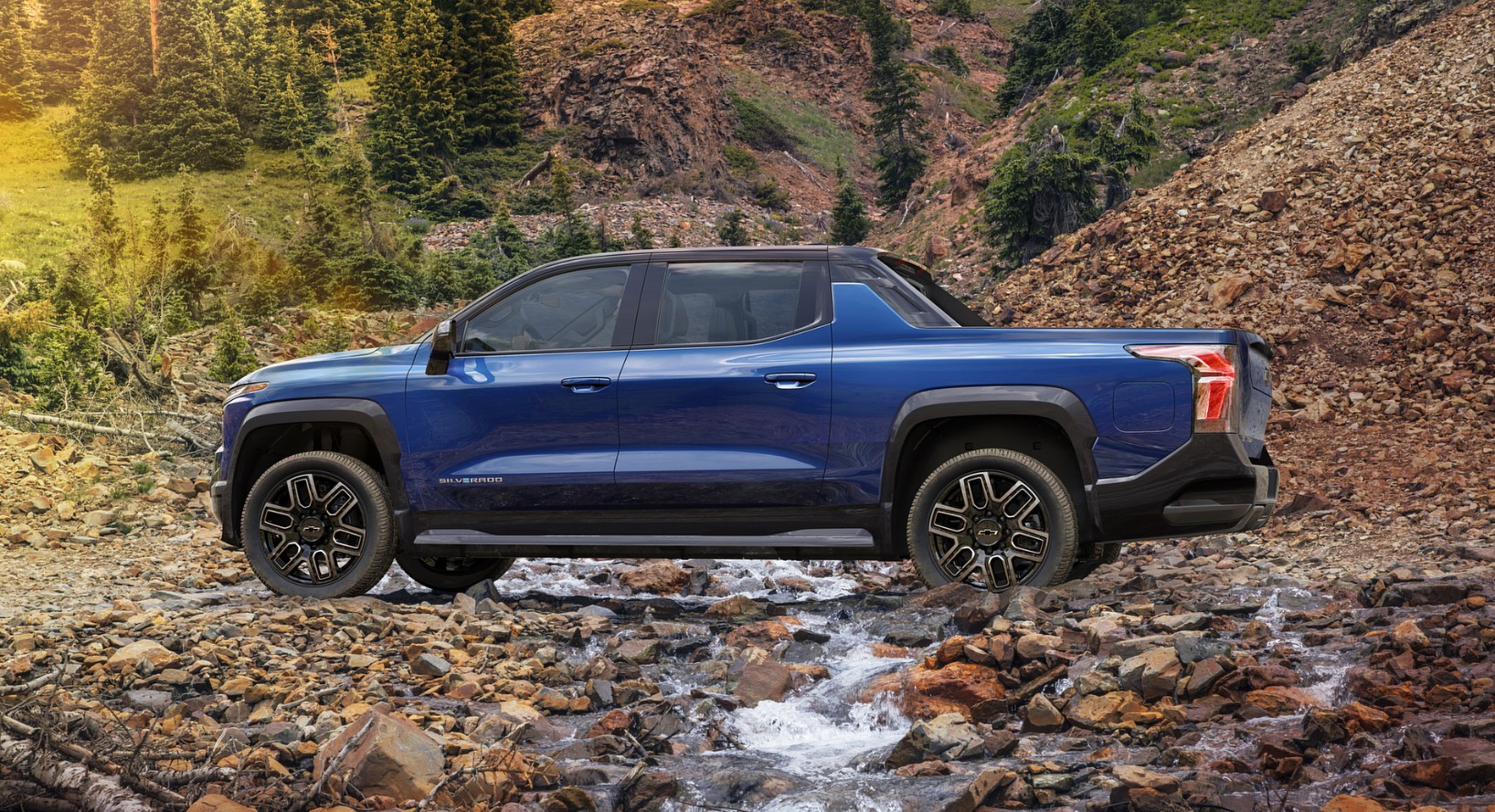
The trim hierarchy is likely to continue evolving as Chevrolet adjusts the Silverado EV to different customer groups. The current range includes work-focused WT models, LT configurations, RST variants, and premium High Country versions, with equipment and power outputs varying according to configuration. The WT is designed around utility and fleet applications, while the RST focuses more heavily on performance, technology, and upscale appearance. A future ZR2-style electric off-road variant is also conceivable, although Chevrolet has not confirmed a 2028 Silverado EV ZR2. If introduced, such a model could use adaptive suspension, specialized tires, additional underbody protection, and revised torque management.
Pricing will depend heavily on battery cost and the amount of standard technology. A reasonable projection would place the entry-level 2028 Silverado EV around $60,000 to $65,000 before destination charges, although commercial and fleet-oriented configurations could potentially remain lower. LT models could move into the $70,000 range, while RST versions might occupy the $80,000 territory. High Country and heavily equipped performance configurations could exceed $90,000 and potentially approach six figures. These estimates are not official Chevrolet pricing and could change substantially before production. 2028 Chevrolet Silverado EV Specs
Conclusion
The 2028 Chevrolet Silverado EV has the potential to push electric pickup technology considerably further. The current model has already established an impressive foundation with long-range capability, up to 12,500 pounds of towing capacity, four-wheel steering, a versatile Multi-Flex Midgate, substantial cargo functionality, and extremely strong electric performance. (chevrolet.com) The next step does not necessarily require dramatically more power. Better efficiency, charging consistency, software, thermal management, and towing intelligence could deliver a more meaningful improvement for everyday owners.
Range will remain one of the biggest selling points. If Chevrolet can increase energy density and drivetrain efficiency enough to push a specialized configuration beyond 500 miles while maintaining practical towing capability, the Silverado EV could become much more attractive to buyers who remain concerned about long-distance electric-truck travel. Charging improvements will be equally important because a large battery only becomes useful for road trips when it can be replenished quickly and consistently.
The Silverado EV also has an advantage that many electric vehicles cannot easily replicate: a long-established truck identity. Buyers already understand what a Silverado is supposed to do. Chevrolet’s challenge is to make the electric version feel equally useful rather than simply technologically impressive. That means preserving payload flexibility, towing strength, durable construction, useful storage, trailer integration, and the rugged proportions expected from a full-size pickup.
For now, the 2028 Chevrolet Silverado EV remains a forward-looking model without finalized specifications, pricing, or release timing. Nevertheless, the current truck provides a strong foundation for what could become an even more capable electric workhorse. If Chevrolet combines longer range, faster and smarter charging, sophisticated driver assistance, improved interior quality, and uncompromised truck functionality, the next Silverado EV could become one of the most compelling full-size electric pickups on the market.